
AR/VR in the Virtual Classroom: The New Normal?
- admin
- 0
- 06-Feb, 2023
AR/VR in the Virtual Classroom: The New Normal?
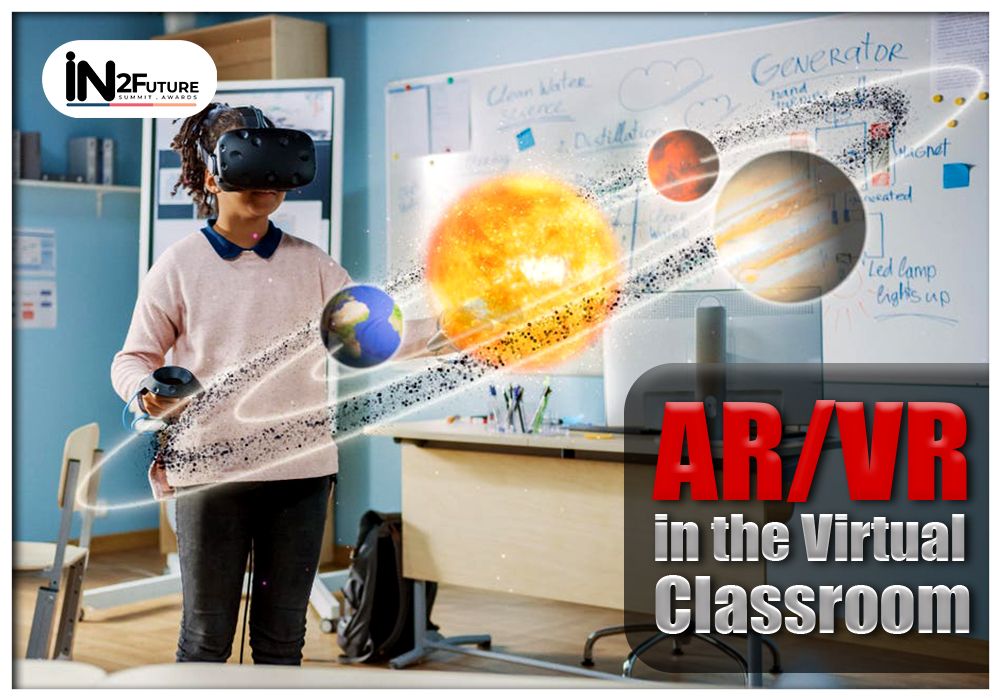
Augmented reality (AR), Virtual Reality have played vital roles in reinventing the educational system because they help the students to learn through experience. Virtual education encompasses the virtual classroom, virtual escape room, virtual science laboratories, robotics, digital tools, etc. They are versatile resources that are valuable in virtual classrooms.
Combination of AR, AI and VR results in the production of high-quality curriculum contents. AI deals with the technical part of the curriculum while VR and AR deal with simulations and virtual reality.
Examples of the application of AR/VR tools are:
-
CoSpaces Edu: It is a tool that empowers the teachers and the students to improve their teaching and learning experiences. The teachers can develop the curriculum for the class and give the students assignments to work on later. The students are able to have hands-on experience in coding, virtual reality 3D or 4D design.
-
Merge Cube: MergeCube is an AR/VR tool that gives students more physical hands-on practical experience with 3D content (for example, plant cells, building plans, sculptures, artifacts etc). It is a computing technology that is spatial in nature and allows the students to upload 3D digital content onto a Merge Cube to be used and accessed anywhere and at any time. Teachers and students are allowed to create science, technology, engineering and math contents, develop apps and make them work.
-
Google Sky Map: It is a planetarium handheld device whereby the users can point their phone to the sky to know and track where planets, nebulae, the moon, the stars are.
-
MondlyAR is an Augmented Reality language device, the first of its kind to be made in the world. It is an interactive and immersive language learning tool for interested learners to learn new languages. It provides a virtual learning assistant that is almost life-like and real using AR technology to simulate real-life situations in an interactive way. It makes use of AI to provide personalized learning experiences for the learners.
When students use AR/VR devices through a headset the teachers are able to log in to the virtual or online classroom to teach the students in an immersive learning environment. AR/VR devices have become more affordable over the years especially the ones used in the classroom. These devices make learning easier and more accessible at an affordable cost.
Benefits of using VR/AR in Virtual Classroom
-
VR, AI, AR makes it easy for people to learn new languages at their own convenience. For example, Duolingo, Lingo Deer, Rosetta Stone, etc. Users can read, write and practice what they have learnt on their devices. Some AR or VR learning platforms allow the user to utilize chatbots powered by AI like speech recognition, recording, animated characters etc. These help the students to improve on their foreign language skills without any intimidation and fear of failure and at the same time, receive feedback in real-time.
-
AI tools are used for scientific research and in medicine to diagnose diseases. For example; use of a neural network to detect cancer cells.
-
AI teaching assistants implemented VR/AR as a natural language processor to answer students' queries concerning projects, homework, deadlines, assessments, difficult topics, etc. For example, the use of Alexa which is an Amazon AI voice assistant in higher institutions to engage students more in campus activities, enhance and improve campus life.
-
AR, VR, AI are engaging, giving students almost real-life experience while learning at the same time.
-
They can be used for personalized coursework, create resources for students to utilize, grade tests, automate coursework and aid the students.
-
AR/VR gives education equity to the students by narrowing the digital gap or divide that occurs due to circumstances.
Many educators and teachers have found it a bit challenging to develop safety strategies for students to learn in a classroom environment due to the Covid-19 pandemic. This is because classroom interaction is essential for students to build upon their emotional, social, cognitive and communication skills.
Virtual classes have made learning a lot easier through video conferencing devices and online platforms to connect the school management, staff, teachers, students and sometimes parents of young students together. AR/VR has become accessible and ubiquitous in the new normal learning environment.